Letting Property?
Begin with a FREE, rental valuation today.
Property Valuation
"*" indicates required fields


Investing in property and becoming a landlord can be a lucrative opportunity, but there can be challenges – including the long list of regulations. Failing to meet legal requirements can lead to serious consequences, including hefty fines and in extreme cases, prison sentences for non-compliant landlords.
The UK government’s landlord regulations help protect tenants’ health and safety by keeping properties free of safety hazards. Regulations such as fire safety and gas and electrical safety ensure landlords act appropriately to protect their tenants.
There are additional legal requirements for HMOs, and single household rental properties in some areas too. If you are looking to buy property to rent out in areas such as Bow or Surrey Quays, check the licensing requirements for the relevant local authority.
To make things simpler, we have compiled this legal requirements checklist for landlords to follow:
Landlords have several fire safety requirements, including:
Landlords must meet gas and electrical safety requirements, which include:
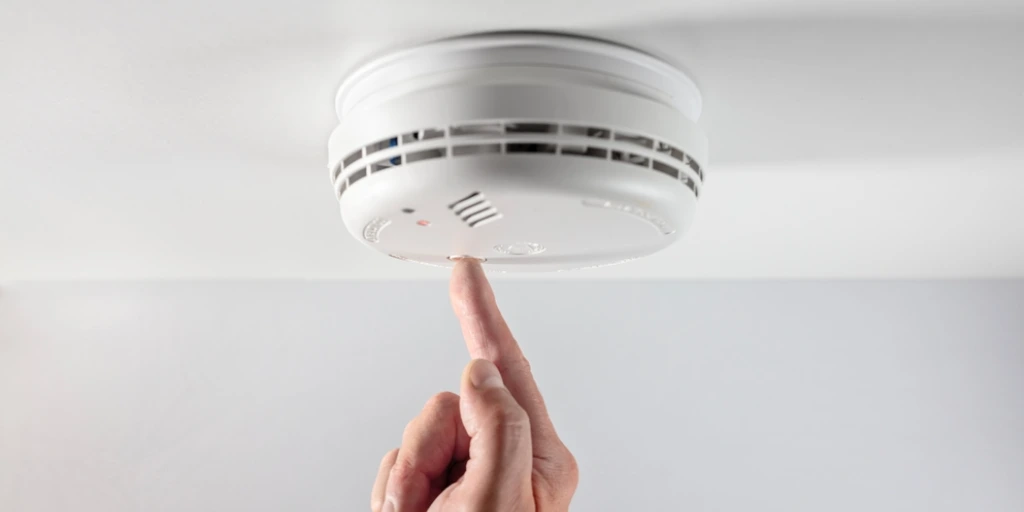
Landlords are responsible for ensuring that smoke and carbon monoxide alarms are fitted where required in the rental property. This includes:
Local authorities may request the Housing Health and Safety Rating System (HHSRS) be performed for rented properties. This involves using a risk-based evaluation tool to identify any risks and hazards to health and safety.
This covers a number of potential health hazards. For example, there’s no legal requirement for landlords to carry out a legionella risk assessment, but you should carry one out to meet HHSRS safety standards.
Want to know more? Dive deeper into fire safety regulations for landlords, what landlord insurance you need, and selective landlord licensing obligations that may affect your property.
An energy performance certificate (EPC) is required when selling or renting a property. The property must be assessed by an accredited assessor, and a copy of the EPC report should be available for prospective buyers and tenants so they can see the energy performance and projected energy bills. An EPC is valid for 10 years.
The EPC provides an overall energy rating for the property on a scale of A (most efficient) to G (least efficient). MEES (minimum energy efficiency standards) require rented properties to have a minimum E EPC rating. There are plans for the government to introduce changes so that ratings will need to be a minimum C EPC rating by 2030, but this is still under discussion.
Since 2007, landlords have a legal requirement to transfer their tenants’ deposits into a tenancy deposit protection scheme and give tenants the prescribed information within 30 days. It must include the deposit protection scheme used, how to reclaim the deposit, the terms for retaining any of the deposit amount, and the landlord and tenants’ contact details.
This process provides more protection to tenants in the event of a dispute. The government-approved tenant deposit schemes in England or Wales are:
The deposit is held in the scheme until the end of the tenancy. Tenancy deposits must be repaid within 10 days of the tenant moving out, or 10 days after reaching mutual agreement of the amount to be paid back.
Landlords must declare all rental income and any other income received. A self-assessment tax return should be completed each year to calculate the money owed to HMRC, with quarterly updates due as Making Tax Digital is rolled out.
The landlord is responsible for paying tax when the property is vacant, and potentially an empty property premium if it’s empty for an extended time.
Buy-to-let mortgage relief has ended, but landlords can claim a landlords’ tax credit worth 20% of your mortgage interest. You will also be liable for Capital Gains Tax (CGT) when selling an investment property.
You must also have the right type of mortgage for properties you rent out – landlords are required to take out a buy-to-let mortgage in most cases. Some lenders will allow existing property owners to temporarily rent their property out under their residential mortgage by requesting consent to let, for a fee. However, this is a short-term solution with most lenders offering just 6 to 12 months.
Buy-to-let mortgages are usually interest-only but carry a higher interest rate, and often have a higher loan to value ratio so require a larger deposit. Expect to meet stricter age limits, prove your other earnings, and demonstrate your projected rental income. Remember too, that landlords are not allowed to live in the property.

There are different rules for landlords depending on the type of tenancy agreement. For example, under the Rent Act 1977, landlords must prove grounds for possession to evict tenants on a regulated tenancy.
But the majority of contracts are assured shorthold tenancies. Landlords must also follow licensing rules, namely additional and mandatory HMO (house of multiple occupation) licensing and selective licensing. Before considering buying or converting to an HMO property, consider that HMO landlords must meet additional fire safety requirements, and an HMO licence must be issued by the local authority who will carry out an HHSRS (Housing Health and Safety Rating System) risk assessment.
Additional HMO licensing requirements for smaller HMOs vary across local authorities, so check the local authority’s HMO licensing rules. Some councils also operate selective licensing for privately rented properties, to tackle problems such as crime or poor housing conditions.
Southwark Council and Lewisham Council run additional HMO licensing and selective licensing schemes. Landlords in designated selective licensing areas have legal obligations to apply for a license. You will have to provide the proposed licence holder’s details along with copies of documents such as your energy performance certificate, gas safety certificate and EICR.
Most landlords will vet tenants to help protect themselves from non-payment of rent and damage to property but there are also vetting processes that they are legally required to do. Landlords are required to check a tenant’s right to rent property in England. This process involves checking the tenant’s original documents that prove they are legally allowed to live in the UK.
Some tenants, such as someone with settled or pre-settled status, can provide landlords with a share code to check the validity of the code and the tenant’s profile page.
Another legal requirement for the landlord is to provide the latest version of the ‘How to rent’ guide, which provides tenants with a checklist of information that will help them to understand the processes involved in renting property from a private landlord.
Landlords have legal requirements regarding property upkeep and some actions related to property maintenance that are best practices to help protect the property.
While it is not a legal requirement to create a check-in and check-out inventory, it is highly recommended to do them to avoid problems if there are any disputes about damage. An inventory should include a comprehensive list of items in the property and the condition they are in. Photos and videos should be used as evidence of the condition at the start of the tenancy.
Want to find out more? Also explore how to evict a tenant without going to court, how to increase rent within the rules, and rent guarantee insurance for landlords.
PAT testing is often a local council requirement for HMOs, but at the very least, it’s recommended to cover your legal responsibilities by ensuring any appliances you provide are in good working order.
If you supply white goods, your tenancy agreements should include them and make it clear who is responsible if you need to replace or repair goods. For example, the landlord may replace or repair goods, or they may require tenants to. Tenants are responsible for any appliances that they bring into the property.
Landlords have legal responsibilities to ensure that their rental properties are safe, free from health hazards, and fit for habitation. This may require regular maintenance to ensure the property provides adequate living standards. Landlords are also responsible for keeping drains, external pipes, exterior and structure of the property in good repair, as outlined in Section 11 of the Landlord and Tenant Act 1985. For this reason it is a good idea to keep a landlord inspection checklist to use when you carry out periodic inspections.
Generally, tenants are responsible for minor maintenance such as changing lightbulbs. However, landlords are responsible for most other property repairs, excepting repairs for damage caused by tenants’ negligence.
The new Renters Rights Bill is set to introduce new legal responsibilities for private landlords, possibly from Autumn 2025 onwards. It includes safety standards and affordability measures, such as:
There are many different regulations and rules to comply with as a landlord and it can take time to keep up with legislation changes. But a good letting agent can help you.
The property lettings professionals at Oliver Jaques can help ensure that all legal obligations are covered when renting your property in Southwark, Bermondsey or Lewisham. Contact us today to find out more.
Begin with a FREE, rental valuation today.
"*" indicates required fields
Want to discuss something specific?
Contact us & we will be happy to help you.
"*" indicates required fields


With rapidly changing lettings legislation, it’s never a bad time to ask ‘what certificates do landlords need?’. The holy trinity of cert...

Could you reduce the council tax you pay on your vacant South East London rental property? Empty property council tax rules changed in 20...

Are you up to date with the fire safety regulations for landlords in London? If you have tenants in private rented properties then fire s...


