Letting Property?
Begin with a FREE, rental valuation today.
Property Valuation
"*" indicates required fields


Setting the right rent is a key factor to being profitable as a landlord, but this can be tricky.
If you increase the rent by too much, you risk losing good tenants and experiencing longer void periods on your rental property.

Checking property portals will give you a better idea of what the average rent is for similar properties in the area. A quick review of the local property market will show that 2-bedroom luxury apartments in Surrey Quays can command around £3,000 pcm, while 1-bedroom apartments in New Cross, range from around £1,500 to £2,000 pcm. Research what is a fair rent amount based on the property type, condition and amenities in your local area.
Handling rent increase negotiations poorly can cause further problems, so you need to follow the correct process. Find out how and when to raise rent in our guide.
When you can give notice to raise the rent will depend on the type of tenancy agreement. For example, a section 13 rent increase can only be used during periodic tenancies, and this cannot be within the first 12 months of a periodic tenancy. If a fixed term tenancy turns into a periodic tenancy at the end of the term, at least one month’s notice is required for raising the rent.
For landlords with fixed term tenancies, a rent increase can only be done through mutual agreement with the tenant or when the landlord has a rent review clause in the tenancy agreement. The clause will detail the amount of notice that is required.
There are three ways to give notice of a rent increase:
For fixed term tenancy agreements, the landlord and tenant must mutually agree to the rent increase, unless there is a rent review clause in place.
The landlord will need to contact the tenant and provide notice of the proposed rent increase. Having a good tenant and landlord relationship with open communication can help the discussions go smoothly.
The landlord may also want to explain the reasons for the increase, such as paying for increased mortgage interest payments. If the tenant agrees, the rent can be increased and a written record should be created that includes the new rental amount and the date that the increase will come into effect.
Want to know more? It’s also worth understanding selective landlord licensing in your area, the legal requirements for landlords that govern tenancies, and how to improve your EPC rating to justify higher rents.
If there is already a rent review clause in the assured shorthold tenancy contract, the landlord can activate the clause – after looking it up to follow the correct process. When setting up tenancy agreements, landlords should always look to include a rent review clause to allow for rent increases in the future.
The clause should include the intervals at which the rent will be reviewed, how any increase is to be calculated, and whether the rent amount will be negotiable.
For periodic tenancies, a section 13 notice can be served, but this can only be done once in a 12-month period. The landlord must provide at least one month’s notice when they are serving a section 13 rent increase.
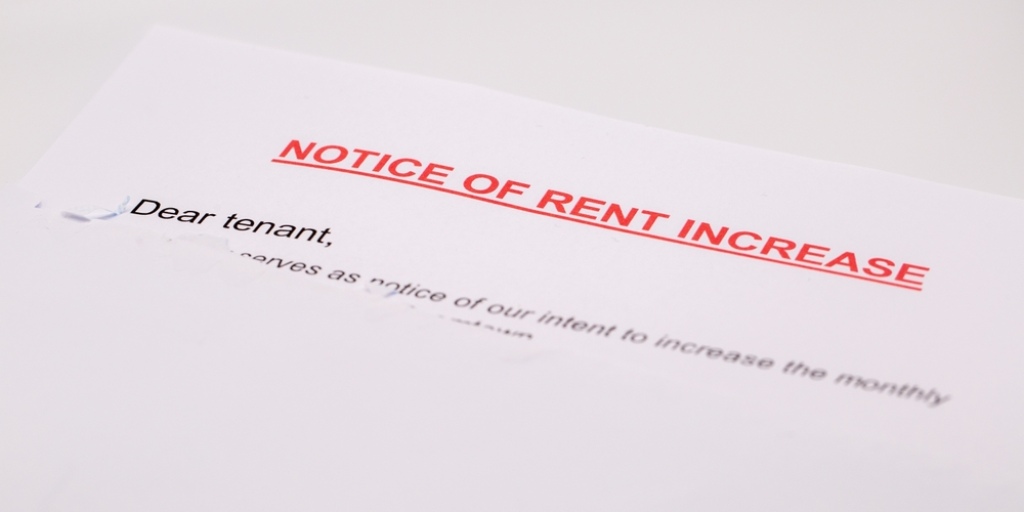
A section 13 notice of the Housing Act 1988 can be served by completing a Tenancy Form 4, which is available on the gov.uk website.
Yes, it is possible for tenants to dispute a section 13 notice through a First-tier Property Tribunal. If the tenant feels that the increase is unfair, they should raise their concerns with the landlord in the first instance to see if an agreement can be reached without going to a tribunal to resolve tenant disputes.
While there is a rent increase cap of 7% for social housing landlords, there is no cap for private landlords. However, any rent increase must be deemed to be fair and realistic, usually in line with inflation. To be regarded as fair and realistic, the landlord should review the local rental market (i.e. what similar properties are currently on the market for) to determine a fair market value.
When using a section 13 notice, you can only increase the rent once every year. For a fixed term tenancy, the contract will state how often you can propose a rent increase (usually be a maximum of once every 12 months). Under the new Renters Rights Bill, rent increases will be restricted to once per year using a Section 13 notice only.
Periodic tenancies require a minimum of 1 month’s notice for a rent rise. If there is a yearly tenancy in place, the landlord is required to provide 6 months’ notice.
Want to find out more? You might also consider how to evict a tenant without going to court, rent guarantee insurance for landlords, and whether a furnished vs unfurnished rental impacts the rent you can achieve.
The Renters’ Rights Bill is expected to change how often landlords can raise rent to once in 12 months, increase how much notice you give to 2 months’ notice, and make section 13 notices the only means to do so. The First-tier Tribunal process will be made more approachable for tenants, and eviction changes such as the abolition of section 21 notices could make it harder to evict tenants altogether if they can’t pay rent.
The bill has now received Royal Assent and is set to become law in early 2026. Thus, the current form of the bill is now its final form, with no further debates to be had about the measures it prescribes.
A landlord can’t currently raise the rent unless there is a rent review clause and tenants have agreed to the increase. Otherwise, you will need to wait until the fixed term ends.
Rent review clauses set out how often a landlord can increase rent, the notice period, and how much they can increase the rent by.
Landlords can only increase rent by a ‘fair and reasonable’ amount. There’s no numerical limit, but it should relate to the going market rent for comparable properties in the local area.
Tenants can challenge a rent rise at the First-tier Tribunal if they think the new rent is too high or the rise is too steep.
Rent increases require one month’s notice for tenants paying on a weekly or monthly basis, or 6 months’ notice for a yearly tenancy. Note that the Renters’ Rights Bill could change the required notice periods imminently.
It’s wise to explain the reason for the rent increase, such as bringing the monthly rent into line with market rates on similar properties, RPI or CPI.
Rent increases can’t be applied retroactively by the landlord. Until now, the Tribunal could backdate rent rises but this practice is expected to end under the new rules.
Unless the tenant takes their dispute to the First-tier Tribunal, they will go into rent arrears if they refuse to pay the new rent.
Landlords can raise the rent in phases, however, the rules on how often you can increase rent still apply.
Rent review clauses in a contract explain how much the rent can be increased by in future, and how often. However, could change in the near future.
Keep impeccable records of the rent rise notice with signed acknowledgement from the tenant or proof of recorded delivery, along with any other landlord and tenant communications.
We help landlords to navigate the challenges of rent increases by providing insights into the local rental market. Contact us today and we can provide expert advice on any aspect of letting your property out.
Begin with a FREE, rental valuation today.
"*" indicates required fields
Want to discuss something specific?
Contact us & we will be happy to help you.
"*" indicates required fields


With rapidly changing lettings legislation, it’s never a bad time to ask ‘what certificates do landlords need?’. The holy trinity of cert...

Could you reduce the council tax you pay on your vacant South East London rental property? Empty property council tax rules changed in 20...

Are you up to date with the fire safety regulations for landlords in London? If you have tenants in private rented properties then fire s...


